The 15 errors that block your progress (and how to correct them)
It's not your level that blocks you, it's what you do between two attempts.


You landed it once. Maybe twice. Then nothing. Or it works one session in three, seemingly at random, without you really understanding why.
The ollie that was clean yesterday is a disaster today. The kickflip that you were finally landing no longer works. The shove-it that seemed mastered becomes chaotic again as soon as you change spots.
It isn’t bad luck. It isn’t that you “aren’t good enough.” Something in the way you train, position yourself or manage your sessions (or your mindset) is creating inconsistency.
And inconsistency can be diagnosed and corrected.
After 18 years coaching beginners and intermediate riders at Old Skullz, I’ve seen the same mistakes repeated endlessly.
Technical errors, body mistakes, method errors, or mental errors.
I've identified 15: the most common and the most limiting. The ones I see in almost every riders who have hit a plateau.
How to use this guide
The 15 errors are divided into 4 groups: technique, body, training method, mindset.
Start with the mini-assessments at the beginning of each group to identify the sections most relevant to you. Then read the corresponding mistakes in detail.
Errors techniques
What your feet do (and what they should do)
Technique, it’s the foundation. But “bad technique” means nothing on its own.
Here is exactly what I look for when a skater is not landing their tricks.
QUICK SELF-CHECK – Do you recognise yourself in any of these situations?
☐ My ollie height is inconsistent: sometimes high, sometimes low
☐ My kickflip flips in the wrong direction or too late
☐ My shove-it spins, but I never know where my feet will land
☐ I miss the landing even when the trick goes well
If you checked 2 or more answers → the errors of this group concern you directly.
| MISTAKE 1 – Your foot placement changes from one attempt to the next | |
| Assessment | “Sometimes it works, sometimes it does not. I do not know why.” |
| Why | Consistency starts before the trick. If you place your feet somewhere different on every attempt, you introduce variables your brain can't correct for. |
| Correction | Before each set of attempts, consciously check your positioning. Same movement, same position, same weight placement. Stick on a piece of coloured grip tape or choose a bolt as a visual reference. |
| Example | For the ollie: back foot centred on the tail, front foot at about 45° towards the nose. Reproduce this exactly on every attempt before thinking about the movement. |
| MISTAKE 2 – Your pop is too weak or hesitant | |
| Assessment | "My ollie is low even when I jump hard." |
| Why | Pop provides the trick’s initial energy. Weak pop is like building on unstable foundations: everything that follows is compromised. |
| Correction | Practise popping without jumping first. Snap the tail down hard and fast, and listen to the sound. A good pop is loud and crisp. Then add the jump back in. |
| Example | For the kickflip: a hesitant pop leads to a weak flick and an unclear rotation. The flip comes as much from the pop as from the ankle movement. If you don't hear the snap, you'll never get enough rotation. |
| MISTAKE 3 – Your front foot slides in the wrong direction | |
| Assessment | “My ollie goes sideways” or “My kickflip goes off at an angle.” |
| Why | The front foot does two things at once: it slides (drags) towards the nose to lift the board, and it guides its path. If the slide angle is wrong, the board goes sideways. If the slide is too short, the nose doesn't rise. If it's too long, you lose control. |
| Correction | Practise the front-foot slide slowly, while stationary, without popping. Feel the path your foot takes over the grip tape. Visualise a straight line towards the nose. This movement needs to become automatic before you use it at full speed. |
| Example | For the kickflip: the ankle flick that flips the board begins with the slide. If your foot slides too far towards the centre instead of the corner, the flip will be weak or won't happen at all. |
| MISTAKE 4 – A passive landing: you “fall” onto the board instead of catching it | |
| Assessment | “The board gets under my feet, but I lose it on landing.” |
| Why | Many riders think landing a trick is all about getting the airborne phase right. In reality, the landing is an active phase. Your feet need to meet the board, rather than waiting for it to arrive. Your knees absorb the impact, and you actively balance your weight. |
| Correction | During practice, focus 50% of your attention on the landing. Visualise your feet coming down towards the board, not the board rising towards your feet. Jump slightly backwards to let the nose come down before you do. Bend your knees on impact. |
| Example | For the shove-it: the board rotates quickly. If you wait for it to finish rotating before placing your feet, you’ll always be late. Anticipate the landing by starting to bring your feet down before the rotation is complete. |
Errors physical
What the rest of your body does during the trick
The foot technique is only one part of the equation. The rest of your body—hips, shoulders, gaze, knees—influences the trick just as much as your feet.
And that’s often where the most insidious blocks hide.
QUICK SELF-CHECK – Do you recognise yourself in any of these situations?
☐ I only look at my feet during the trick
☐ My shoulders turn or open up when I don’t want them to
☐ I instinctively lean back when I pop
☐ My knees are straight when I land; I land “stiffly”
If you checked 2 or more answers → the errors of this group concern you directly.
| MISTAKE 5 – You look at your feet during the trick | |
| Assessment | “I lower my head to see if it’s spinning.” |
| Why | Your gaze leads your body. When you lower your head, you shift your center of gravity too far forward, alter the trick’s trajectory and lose the visual information you need for the landing. Paradoxically, looking at your feet stops you from using them properly. |
| Correction | The aim isn't to look up; it's to avoid looking at your feet. Focus on the landing point, where you want your feet to go, and keep your gaze there throughout the trick. That point guides your body, rather than an artificial horizon line. With practice, the board and your feet naturally enter your peripheral vision without you needing to watch them. |
| Example | For the kickflip: instead of looking down to “watch the flip”, mentally focus on the landing area in front of you. Trust your muscle memory to handle the flip. |
| MISTAKE 6 – Your shoulders are not parallel to the board | |
| Assessment | “My tricks always go a bit sideways.” |
| Why | Your shoulders steer your body. If they open up (facing the ground) or close off (turning your back), they lead your hips, which lead your feet. A trick that veers off line often starts with the shoulders, not the feet. |
| Correction | First, check your shoulder alignment while stationary: with the board under your feet and your arms by your sides, make sure your shoulders line up with the board. Then keep that alignment throughout the trick. Filming your session from the front and the side is the quickest way to spot this problem. |
| Example | For the pop shove-it: if your shoulders rotate with the board instead of staying steady, you’ll keep jumping into the rotation and missing the landing. Keeping your shoulders still is the key to this trick. |
| MISTAKE 7 – You shift your body backward as you pop | |
| Assessment | “I lean back when I jump.” |
| Why | A natural protective reflex: when the brain anticipates a forward fall, it shifts the centre of gravity backwards. The result: your weight moves onto the tail, the nose doesn't rise and the board moves backwards. This is the hardest mistake to correct because it's instinctive. |
| Correction | Become aware of this reflex. Before you pop, mentally check that your weight is centered. As you pop, think “jump up” rather than “move backwards.” Practicing jumps in place with the board, without doing a trick, helps retrain this reflex. |
| Example | On an ollie: recurring rear wheelbite and an ollie that nose-dives are symptoms of this backward weight shift. The correction: be aware of your centre of gravity every time you pop. |
| MISTAKE 8 – Your knees don’t absorb the landing impact properly | |
| Assessment | “I slide out or lose my balance every time I land.” |
| Why | Landing with straight knees sends the full impact into your ankles and feet. The board bounces and your feet slip. Bent knees act as shock absorbers, absorbing energy and providing immediate stability. |
| Correction | Practise landing separately from the trick: simple jumps off a step, consciously absorbing the impact with your knees. Then bring this movement back into your skateboard landings. Target: knees bent at 90° on impact. |
| Example | For all tricks involving height or spot features: the more uneven or lower the surface, the more active your knees need to be. Landing stiff-legged on a ledge risks injury or losing your board. |
The errors of method
How you train (often “badly”)
Your technique can be good and your progress still stalled. Because it's not just what you do that matters, it's how and how much you do it..
These mistakes are the most difficult to see because they look like real training.
QUICK SELF-CHECK – Do you recognise yourself in any of these situations?
☐ I work on 5 different tricks in the same session
☐ I do sets of 20–30 attempts without breaks or analysis
☐ I don’t skate regularly throughout the week
☐ When a trick won't land, I try harder and more often
If you checked 2 or more answers → the errors of this group concern you directly.
| MISTAKE 9 – You practise too many different tricks in the same session | |
| Assessment | “I want to progress quickly, so I work on everything at once.” |
| Why | The brain reinforces movements through repetition. Switching tricks too quickly prevents the neural circuit from becoming established. It's like trying to learn 5 languages at once: you don't progress in any of them. |
| Correction | Choose no more than 1 or 2 tricks per session. Work on them in depth and repeat them mindfully. If you're a beginner, one trick per session is plenty. The quality of your repetitions matters more than the number of tricks you attempt. |
| Example | An effective session: 20 min of ollies focusing on one specific point (the front-foot slide), 15 min of shove-its focusing on landing, and 10 min of free skating. |
| MISTAKE 10 – You make attempt after attempt without observing or analysing | |
| Assessment | “I’m on autopilot: I try, I try, I try.” |
| Why | Mindless repetition reinforces mistakes just as much as successes. If you miss a trick in the same way 30 times in a row without making adjustments, you're learning the mistake. Brain plasticity is neutral: it reinforces what's repeated, not what's correct. |
| Correction | Use the 5-attempt rule: after 5 tries, take a 30-second break. Mentally review what happened. Identify one thing to correct. Then resume with that adjustment in mind. “Slow and mindful” beats “fast and automatic”. |
| Example | If you film your session (highly recommended), watch the clips between sets, not just at the end. |
| MISTAKE 11 – Your training schedule is too irregular | |
| Assessment | “I skate for 3 hours one Saturday, then don’t skate for 10 days.” |
| Why | Muscle memory develops and fades. An occasional long session is worth much less than short, regular sessions. After 10 days without skateboarding, some of what you’d learned starts to fade. You restart halfway back and spend the first hour “waking up” instead of improving. |
| Correction | Aim for at least 3 sessions a week, even short ones (30–45 min). Weekly consistency is THE number one factor in long-term progress. A short session after school or work is better than nothing. |
| Example | For riders short on time: even 15 minutes of stationary practice (pop, front-foot slide, landing) in your garden or living room has a real effect on muscle memory. |
| MISTAKE 12 – You train to the point of physical and mental exhaustion | |
| Assessment | “I skate until it works or I cannot go on anymore.” |
| Why | Fatigue reduces the quality of your movements. The final attempts in an exhausting session reinforce compromised movement patterns. What's more, ending a session with repeated failures conditions your brain to associate that trick with frustration, increasing apprehension at the next session. |
| Correction | Finish on a success or something positive, even if it's only partial. If you don't land a trick after 20 serious attempts, move on to something else. Return to it next session with a fresh mind. Fatigue is the enemy of technical progress. |
Errors mental
What's happening in your head between two attempts
We often underestimate the impact of mindset on consistency in skateboarding. Pourtant, c’est souvent là que tout se joue. Surtout pour les tricks intermédiaires qu’on “sait faire” mais qu’on ne rentre pas de manière automatique.
QUICK SELF-CHECK — Do you recognise yourself in any of these situations?
☐ I land my tricks better when I’m not paying attention than when I’m trying “for real”
☐ I think about failing as I attempt the trick
☐ Having someone watch completely changes the way I skate
☐ I quickly lose confidence when I fail several times in a row
If you checked 2 or more answers → the errors of this group concern you directly.
| MISTAKE 13 – You overthink during the attempt | |
| Assessment | “When I try without thinking, I land it; when I concentrate, I miss it.” |
| Why | That's the paradox of control: the more you consciously try to control everything during an automatic movement, the more you disrupt it. The conscious brain is too slow to manage a trick in real time. When muscle memory is developing, conscious analysis short-circuits the process. |
| Correction | When you make the attempt, your preparation is done. Trust your body. Use just one keyword or mental image during the trick, not a list of instructions. “Pop” for the ollie. “Flip” for the kickflip. Keep it simple: just one cue. |
| Example | Riders who say “I land it better when I'm just skating freely” have simply discovered their optimal state. The goal is to reach that state deliberately. |
| MISTAKE 14 – You visualize the failed attempt instead of landing the trick | |
| Assessment | “Just before I try, I picture the fall.” |
| Why | Attention comes before action. If your brain keeps replaying a failure scenario (falling, the board shooting away, losing your balance), it literally programmes that outcome. This isn't cheap positive thinking; it's neurology: attention directs motor resources. |
| Correction | Before every attempt, take 3 seconds for positive visualisation: a clean landing, both feet on the board, rolling away afterwards. Just 3 seconds. Then try. This shift in attention changes the outcome measurably. |
| Example | For the kickflip: visualise both feet landing on your board as it finishes rotating. This precise image is more effective than a vague positive thought. |
| MISTAKE 15 – You let the social setting undermine your performance | |
| Assessment | “I skate well on my own, but as soon as people are around, I miss everything.” |
| Why | Social anxiety is real in skateboarding, at every level. Having an audience, even a supportive one, activates the stress response and impairs muscle memory. For teenagers, fear of judgement amplifies it. For adult beginners, it can sometimes be paralysing. |
| Correction | Gradually expose yourself to the social setting: first a trusted friend, then a small group, then a busy skatepark. Each successful exposure recalibrates your brain. And remember: other skaters are usually far too busy working on their own tricks to watch yours. |
What changes when we correct the right mistakes
Most of the riders I've seen stagnating for weeks don't lack talent, they lack precise analysis.
They work hard but on the wrong things or the right ones but in the wrong way.
Correcting a single fundamental error, often foot placement or repetition without analysis, can break months of stagnation in one or two sessions. It isn’t magic: the block had a specific cause, and we found it.
If you want to learn tricks step by step, head this way:
-> Learn the ollie
-> Learn pop shove-it
-> Learn kickflip easily
If you're a beginner and you don't know where to start, read our complete guide to learn skateboarding, you’ll find everything you need there.
If you want to stop going in circles and finally see your progress pick up, you have three options:
Skate lessons in and around Avignon. Learn, progress and push your limits. At any age.
Online coaching. Want to progress at your own pace, wherever you are? We support you with a clear plan and an outside perspective.
An immersive week to learn as much about yourself as about your skating.
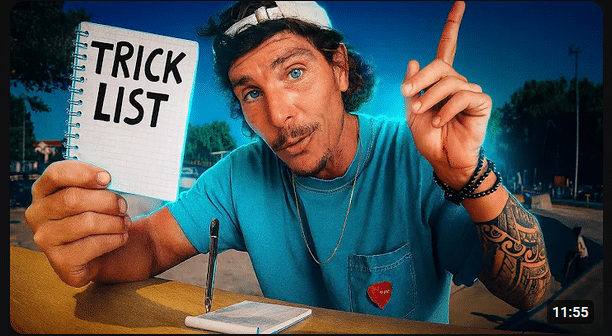
The method that gives you a boost your level in skateboarding
With us, you'll see:
-> How to structure a session to improve faster
-> Why limited time forces you to stay focused and creative
-> Coaching tips for managing stress, pressure and confidence
-> Concrete examples of adaptations according to the level of each skateboarder
Follow us for more tips and fun
You don't need to stagnate anymore.
Join Old Skullz and finally start making progress with a clear method.
See you soon,
Team Old Skullz


